Selecting a Lighting Console: DMX Universes, Parameters, Programming, and Network Processing
Quick Answer
Choosing a lighting console depends on the programming paradigm (tracking vs. cue-only), required DMX parameter capacity, and venue specifics. Theatrical environments often prefer systems with dedicated tracking logic (ETC Eos), while live touring and concert venues require rapid busking, flexible playback executors, and advanced effects engines (ChamSys MagicQ MQ500M Stadium, MA Lighting). Decisions should be made based on actual universe needs, hardware interface preferences (motorized faders, encoders), and local operator availability.
Summary
The lighting console is the central control hub of any production environment. This guide evaluates control hardware and software architecture, detailing how universe calculation, playback engines, network protocols, and interface ergonomics dictate which desk fits theatrical, touring, broadcast, or fixed installation applications.
Who This Article Is For
- •Lighting designers, specifying gear for upcoming tours and projects.
- •Technical directors, upgrading venue infrastructure.
- •Rental companies, evaluating return on investment for new control stock.
- •System integrators, designing control networks for houses of worship and studios.
What You Will Learn
- •The technical distinction between tracking and cue-only software logic without oversimplification.
- •Accurate mathematical DMX universe calculations based on fixture DMX channel footprints.
- •The mechanics of Art-Net, sACN (priorities, multicast, universe addressing) and network node conversion.
- •Why operator training ecosystems and manufacturer support matter more than raw hardware specifications.
Introduction
A venue purchases a flagship lighting console with multiple touchscreens for its 300-capacity corporate event space. Six months later, the desk sits largely unused because local freelance operators do not know the software syntax, and the hardware surface takes up too much space in the FOH area. Buying a lighting console is not about acquiring the highest specification numbers; it is about matching the software philosophy, hardware interface, and parameter count to the exact workflow of the venue. The right console accelerates programming; the wrong one creates a permanent bottleneck.
Console Categories
PC-Based Systems (PC/Mac)

Software packages running on a personal computer paired with a USB playback wing (MagicQ Compact Wing or network node.
- •Capacity: From 1 up to 64 universes (depending on software, license, and hardware setup, e.g., ChamSys MagicQ Mini Connect.
- •Best for: Small clubs, corporate spaces, basic architectural lighting, mobile rigs.
Mid-Range Desks
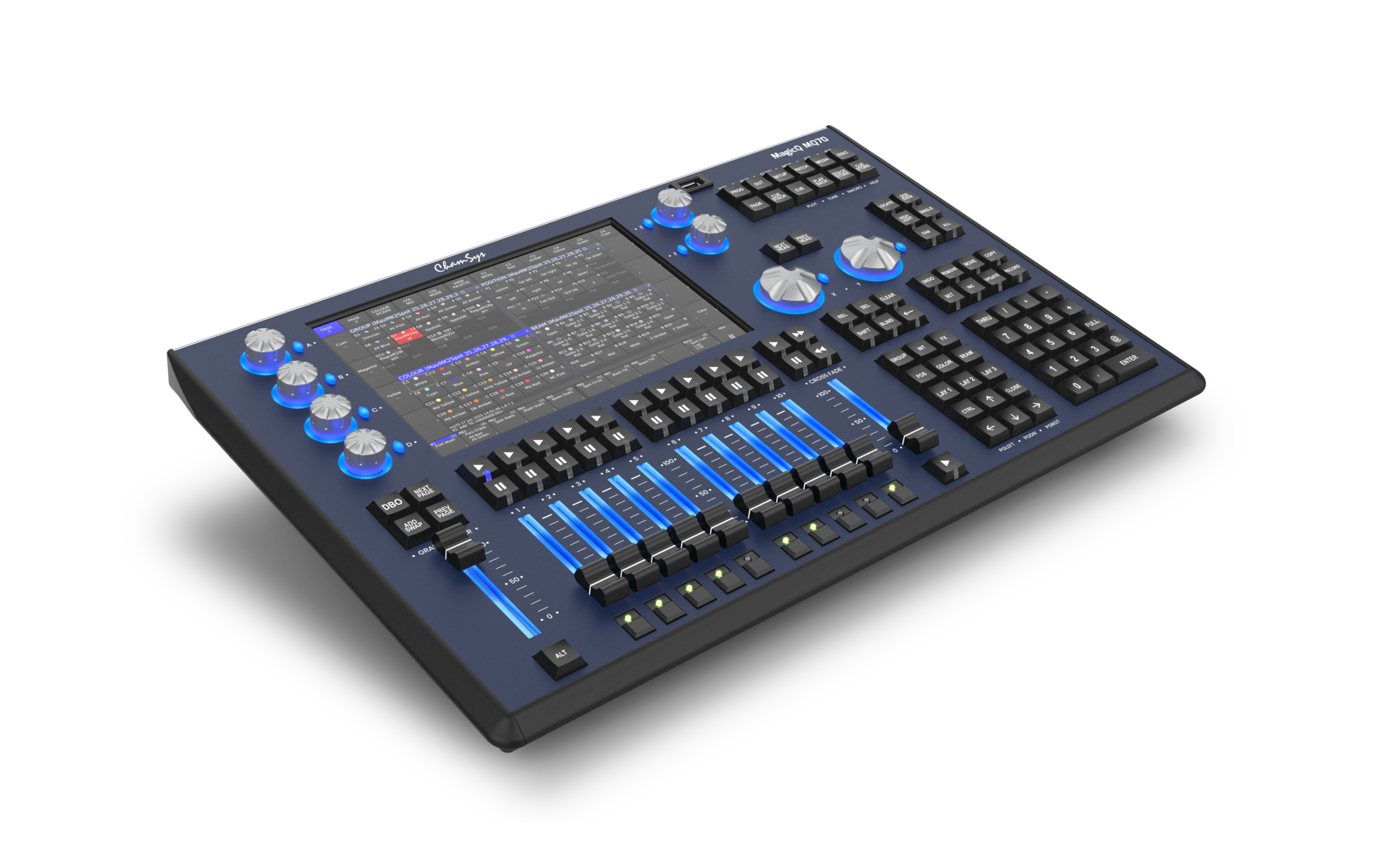
Integrated hardware with a dedicated OS, built-in processing, and touchscreens.
- •Capacity: 4 to 48+ universes (e.g., ChamSys MagicQ MQ70 Compact.
- •Best for: Regional rental companies, mid-sized theatres, houses of worship.
Professional Touring & Stadium Consoles
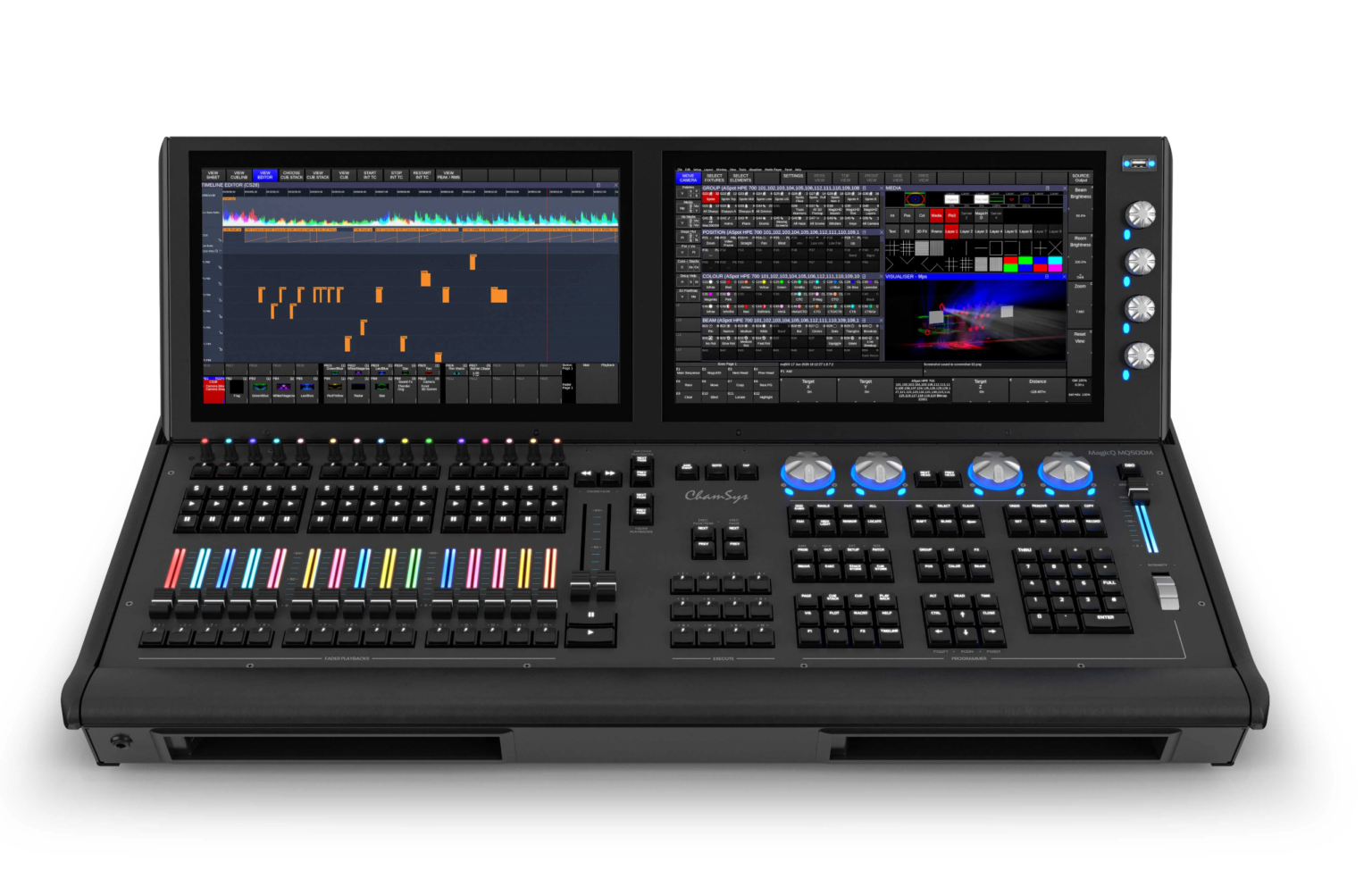
Flagship surfaces with multiple screens, motorized faders, and scalable network processing architecture.
- •Capacity: 64 to 256+ universes direct or via external network nodes (e.g., ChamSys MagicQ MQ500M Stadium.
- •Best for: Arena tours, large festivals, complex broadcast productions.
Programming Paradigms: The Software Core
The most significant difference between consoles lies in how their software core processes data.
Tracking vs. Cue-Only
- •Tracking: A data processing mode where attribute values persist in subsequent cues until a new instruction or condition defined by system logic is encountered. Specific tracking behavior varies across consoles (e.g., ETC Eos, MA Lighting, ChamSys MagicQ MQ500M. It allows rapid global sequence editing but requires strict data structure awareness.
- •Cue-Only: A recording or editing mode where changes are localized exclusively to the target cue (restoring previous values in subsequent cues) to prevent unintended downstream tracking. Cue-only is useful for isolating local edits, whereas tracking streamlines batch modifications across cuelists.
Presets and Palettes in Cuelists
In most professional systems, Palettes, Presets, or equivalent value-reuse mechanisms play a vital role. Rather than storing hard DMX values, cues contain references to presets (e.g., "Drummer Position" or "Stage Red"). If a position or color changes, updating a single preset automatically updates all dependent cues across the show.
Key Software Features Explained
The Effects Engine (FX Engine)
A powerful FX engine generates mathematical intensity waves, color chases, and movement figures without forcing the programmer to plot individual steps manually. Look for engines offering flexible phase, offset, and grouping manipulation.
Pixel Mapping
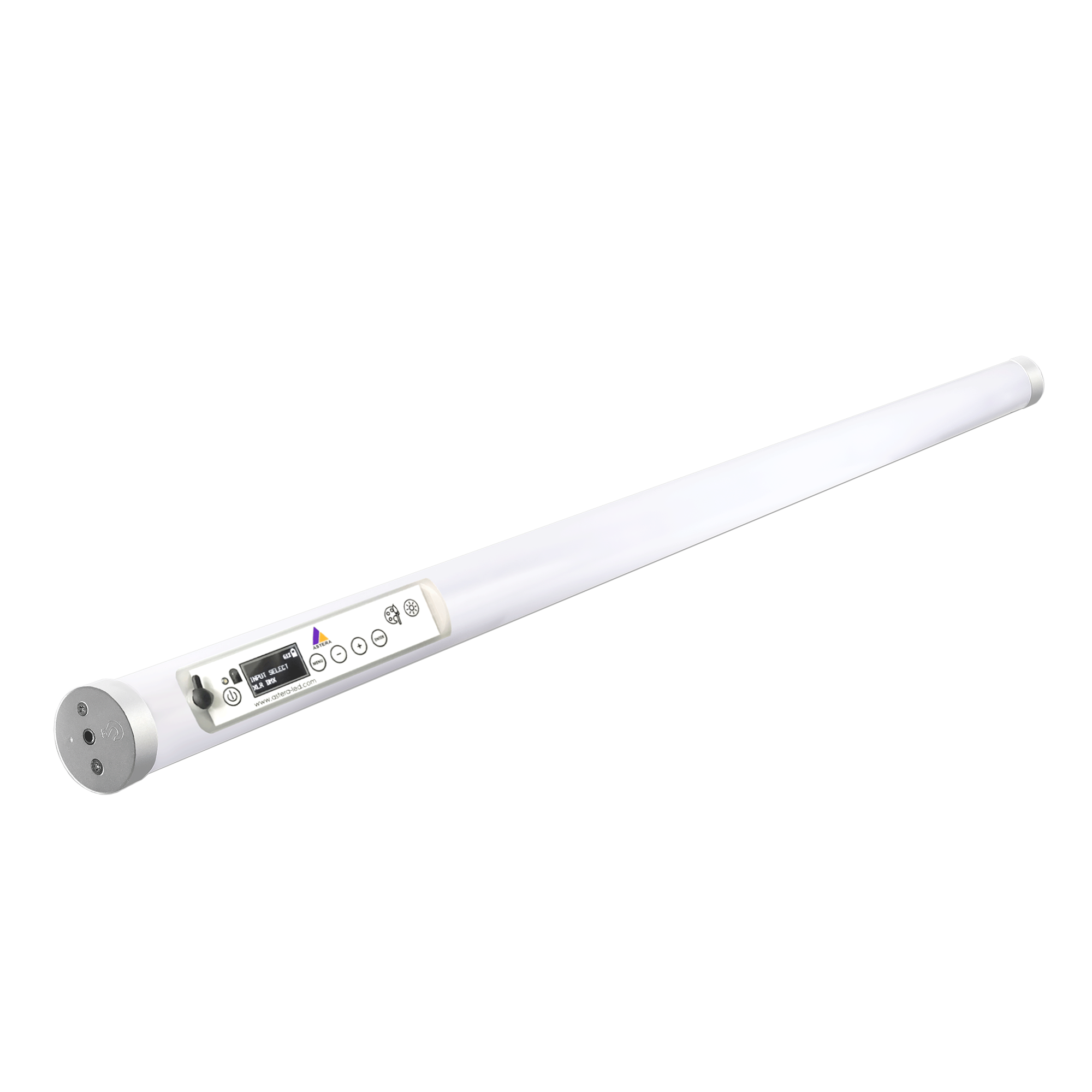
Modern rigs incorporate high pixel-density fixtures (such as Astera Titan Tubes. If pixel mapping is part of your workflow, verify whether the console handles 2D content generation natively or requires a dedicated media server / pixel processor.
Visualizer & Video Integration
Built-in 3D visualizers allow programmers to pre-plot shows off-site. Protocol support like CITP simplifies media content information exchange between control systems and media servers, while NDI is used to transport IP video streams.
Hardware Considerations: The Physical Interface
Motorized Faders vs. Manual Faders
Motorized faders automatically position themselves at the active levels when switching playback pages. This is essential for large shows with dozens of cuelists. Manual faders require "pickup" before grabbing control, which is less convenient during live operation.
High-Quality Encoders and Control Elements
High-resolution encoders map physical rotation to pan, tilt, color mixing, and gobo attributes. Tactile feedback from precise encoders directly impacts programming speed.
Wings and Expansion
Modular expansion allows adding physical fader wings (such as ChamSys MagicQ MQ500M Stadium Wing or MagicQ Compact Wing to scale physical controls as production complexity grows.
Network Output and Processing
Universes vs. Parameters
Manufacturers license control capacity differently based on console configuration and license tiers.
- •Parameter Counting: Some systems have their own logic parameter counting. For instance, 16-bit Pan may count as one parameter even though it physically uses two DMX channels.
- •Universe Counting: Hard limits on total DMX universes (512 channels each).
Calculating DMX Requirements

Total universe requirements are determined by total DMX channel consumption (channel footprint), not strictly fixture counts. One DMX universe contains 512 channels.
- •If 100 moving heads (ROBE LEDBeam 350 operate in a 20-channel mode: 100 × 20 = 2,000 channels → 4 universes required (2000 / 512 = 3.90).
- •If the same 100 fixtures (ROBE FORTE operate in a 30-channel mode: 100 × 30 = 3,000 channels → 6 universes required.
- •In 40-channel mode: 100 × 40 = 4,000 channels → 8 universes required.
- •In real-world systems, fixture distribution across universes also depends on address planning and physical DMX line topology.
- •Pixel-mapped fixtures consume data rapidly. Before calculating network infrastructure, check each fixture's exact DMX footprint (e.g., expanded pixel profiles on Astera Titan Tubes.
Network Protocols (Art-Net and sACN)
Modern installations rely on DMX over Ethernet.
- •sACN (ANSI E1.31) supports source priority mechanisms and multicast/unicast streaming, making it well-suited for complex multi-console systems.
- •Art-Net uses Net/Sub-net/Universe addressing and unicast/broadcast delivery. Certain protocol versions also support RDM data transmission.
Physical conversion is handled by network nodes (e.g., DMXking that receive Art-Net/sACN over Ethernet and convert them into physical DMX ports on stage.
DMX Connectors (5-pin XLR)
ANSI E1.11 specifies 5-pin XLR as the standard connector for DMX512-A, although 3-pin XLR is widely used by stage equipment manufacturers. When consoles include physical DMX ports, 5-pin XLR is standard, though modern systems primarily route DMX over Ethernet (Art-Net/sACN) to external DMX nodes.
RDM (Remote Device Management)
RDM is valuable for remote fixture configuration and diagnostics (address changes, sensor monitoring), but support is not mandatory for every single console or network segment.
Training and Ecosystem Support
Hardware specifications mean nothing if local operators lack software proficiency.
- •Check for authorized training centers and certified training programs.
- •Evaluate offline PC editor software availability for offline show preparation.
- •Select brands supported by an active user community and technical service.
Decision Matrix: Consoles by Venue Type
| Venue Type | Primary Requirement | Preferred Console Style | Example |
|---|---|---|---|
| Theatre | Precise tracking, cue timing, quiet operation | Theatrical syntax / Tracking | ETC Eos |
| Festival / Touring | Speed, busking flexibility, strong FX engine | Hybrid / Busking / Multi-Playback | MagicQ MQ500M Stadium, MA3 |
| Church / Install | Simple playback interface for volunteers | Executor buttons / Presets | ChamSys QuickQ 10 / MQ70 |
| TV Broadcast | Color precision, timecode integration | Tracking, network redundancy | MA3, MagicQ MQ500M |
| Nightclub | Sound-to-light, rapid playback deployment | Busking layout | MagicQ Compact Wing |
Common Mistakes
- 1.Judging a console solely by screen count. Screen count does not compensate for weak software architecture or processing bottlenecks.
- 2.Ignoring Total Cost of Ownership (TCO). Consoles require flight cases, network switches, DMX nodes (DMXking, and UPS power backup.
- 3.Specifying universe capacity without growth margin. Plan universe headroom according to forecasted system expansion. For touring/concert rigs, generous headroom is often justified, whereas fixed installs can calculate headroom precisely.
- 4.Neglecting redundancy (Backup architecture). In professional productions, backup architecture must be planned in advance. Failover handling depends on specific console system, software, protocol priority, and network topology.
- 5.Misunderstanding UPS requirements. Some professional desks feature built-in UPS batteries, but external power protection remains best practice.
- 6.Oversimplifying DMX node failover. On signal loss, DMX node behavior depends on hardware settings (holding last look, fading to blackout, or triggering fallback looks).
Best Practices
- 1.Test software before purchasing. Spend time in offline editors. For example, ChamSys MagicQ software runs on PC with complete programming features.
- 2.Allocate dedicated budget for operator training. Training investment depends on system complexity and team readiness. For complex systems, plan training early during procurement.
- 3.Design network architecture early. Map Art-Net/sACN topology, switch specifications, and node placement before finalizing console selection.
- 4.Test backup failover scenarios under rehearsal conditions. Simulate primary controller loss during rehearsals to verify network stability.
- 5.Standardize console fleet stock. For rental houses, standardizing on a single control ecosystem streamlines training, maintenance, and logistics.
ART-R Recommendations
For projects requiring flexible busking, sACN/Art-Net scalability, and the robust MagicQ ecosystem, ART-R recommends considering ChamSys as a primary option:
- •Touring & Arenas: ChamSys MagicQ MQ500M+ Stadium offers direct output for up to 256 universes, motorized faders, and built-in 3D visualization (MagicVis).
- •Mid-Sized Venues: ChamSys MagicQ MQ70 Compact features a compact chassis suitable for mobile production setups and natively controls 24 universes (expandable to 48).
- •Compact & PC Setups: ChamSys MagicQ Compact Wing paired with a PC/laptop offers a cost-effective professional control solution.
- •Training & Support: ART-R provides ChamSys training and technical support for systems of all complexity levels.
FAQ
Can I run a major concert on a PC-based lighting system?
In terms of programming functionality, a PC system with a wing like MagicQ Compact Wing is close to hardware consoles, though output capacity and hardware I/O depend on connected wings, nodes, and licensing.
What is the difference between Art-Net and sACN?
Both transmit DMX over IP networks. sACN (ANSI E1.31) supports priority handling and multicast/unicast modes, making it well-suited for multi-controller network setups. Art-Net is a widely used DMX protocol, with specific versions also supporting RDM.
Why do consoles use 5-pin DMX connectors?
ANSI E1.11 specifies 5-pin XLR as the standard connector for DMX512-A, although 3-pin XLR is widely used by stage equipment manufacturers.
Do I need a console with SMPTE timecode input?
Timecode is required for precise, automated synchronization with audio tracks or media servers. Live band performances typically rely on tap-tempo and manual playback.
Can a ChamSys console control third-party network nodes?
Standard Art-Net or sACN nodes from third-party manufacturers (e.g., DMXking typically work with consoles supporting open network protocols. Proprietary nodes may require native system consoles.
What is RDM and is it mandatory?
RDM (Remote Device Management) enables bi-directional communication over DMX lines for fixture configuration and monitoring. It is valuable for diagnostics, though support varies by console and network segment.
How much does a professional lighting system cost?
Console system costs vary based on control class, universe count, hardware interface, licensing tiers, and processing nodes.
People Also Ask
How long does it take to learn a professional lighting console?
Basic patching and playback can be learned in a few days, whereas mastering complex effects, tracking logic, and network management requires months of practice.
Can I use mobile apps for remote control?
Many modern professional systems offer mobile or web interfaces for remote fixture focusing and line checks. Availability and functionality should be checked for the specific console model.
What happens if a DMX node loses network connection?
On network loss, node behavior depends on hardware settings (holding last look, fading to blackout, or triggering fallback looks).
Related Articles
- •Battery-Powered Lighting Fixtures: Batteries, CRMX, and Mobile Control
- •How to Choose a Moving Head Fixture
- •How to Write Stage Equipment Specifications for Tenders
- •Master Stage Technology Integration Guide by ART-R
Related Categories & Brands
Glossary
- •Universe: A single block of 512 DMX512 control channels.
- •Busking: Operating lighting live "on-the-fly" rather than executing pre-programmed cuelists.
- •Tracking: A programming method where attribute values persist in subsequent cues until a new instruction is recorded.
- •Timecode: A timing signal or sync message allowing alignment across cue, lighting, audio, and media systems. Professional systems commonly use SMPTE/LTC and MTC.
- •Node: A network interface converting Ethernet protocols (Art-Net/sACN) into physical DMX outputs.
- •Encoder: A continuous rotary dial for precise fixture attribute adjustment.
- •Palette/Preset: A saved attribute reference point (position, color, gobo) linked across cues.
- •RDM: Remote Device Management for two-way fixture addressing and monitoring over DMX.
Conclusion
Selecting a lighting console requires balancing software capability, network architecture, and operator proficiency. Prioritize tracking logic, network expansion capacity, and FX engine flexibility. The best console is one that meets your venue's production demands and is backed by a reliable local training and service ecosystem.